





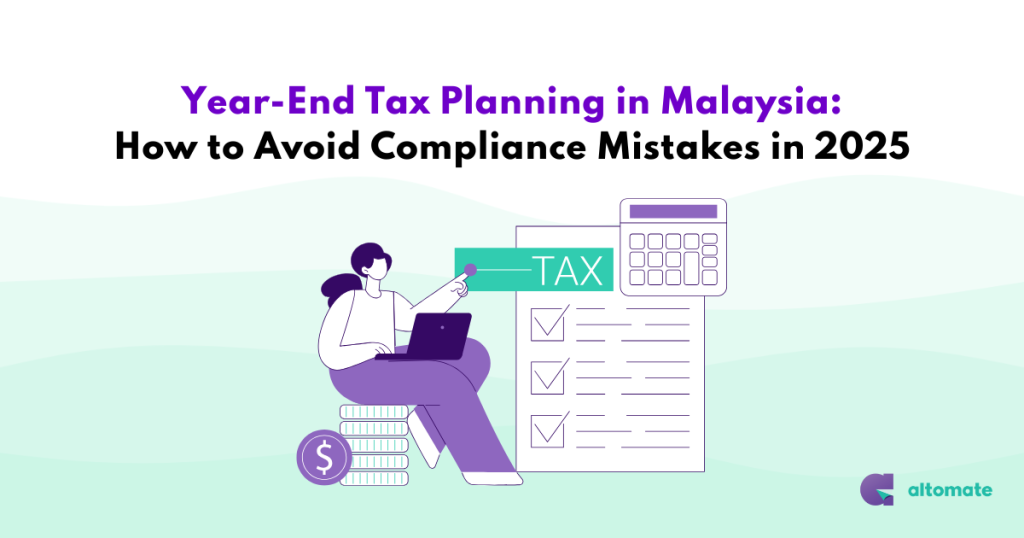
Year-end is crunch time for every Malaysian business — especially when it comes to tax planning, tax filing, and ensuring full compliance with Malaysia’s ever-evolving tax laws. Whether you’re managing corporate tax, income tax, or individual obligations, closing your accounts properly before the end of the financial year can drastically reduce your tax liabilities and help you enter 2025 with a clean slate.
Unfortunately, many Malaysian SMEs and business owners rush their year-end tax return preparation and end up overpaying tax, missing available tax reliefs, or triggering unnecessary tax issues with the Inland Revenue Board (LHDN).
This guide breaks down practical year-end tax planning strategies, common compliance pitfalls, and what Malaysian businesses must do to avoid penalties, additional tax, or audits.
Year-End Tax Planning in Malaysia: Why It Matters More Than Ever
Year-end tax planning in Malaysia isn’t just about reducing tax legally — it’s about strengthening your company’s overall tax position, ensuring proper compliance, and avoiding mistakes that can cost you in 2025.
Effective tax planning helps you:
- Reduce your taxable income
- Take advantage of tax incentives and tax reliefs
- Lower your overall tax burden
- Avoid penalties for late tax filing or incomplete tax returns
- Strengthen your records in case of a future tax audit
Most importantly, year-end planning ensures your chargeable income is accurate and optimised before the deadlines hit.
Understanding Tax in Malaysia: The Basics You Shouldn’t Ignore
Before diving into the strategies, Malaysian taxpayers — both individuals and companies — must understand the basics of tax in Malaysia.
Corporate Income Tax in Malaysia
Companies in Malaysia, including SMEs, are taxed under the Income Tax Act 1967. Corporate tax rates vary, and SMEs enjoy preferential rates on the first RM150,000 of business income.
Personal & Individual Tax Planning
For individuals, especially directors and business owners, individual tax planning includes reliefs, deductions, private retirement contributions (PRS), insurance, and allowable expenses.
Tax Filing Deadlines
Year-end planning helps you meet all deadlines, especially for:
- Company tax returns
- Employer filings
- Estimated tax payments
- Tax payments to avoid penalties
When you understand the Malaysian tax system, you can better allocate expenses, leverage tax incentives, and reduce tax without breaking compliance rules.
Common Year-End Tax Mistakes Malaysian Businesses Make
Even seasoned business owners fall into these traps:
1. Not reviewing expenses before year-end
Many companies forget to record or allocate deductible expenses, which increases their tax payable unnecessarily.
2. Missing out on tax incentives
Malaysia offers various incentives — including the Investment Tax Allowance, Reinvestment Allowance, and digitalisation incentives — but SMEs often don’t know they qualify.
3. Poor documentation
Lack of receipts, missing invoices, and weak record-keeping can result in additional tax during an audit.
4. Overlooking director or shareholder transactions
Dividends, director fees, reimbursements, and benefits-in-kind must be accounted for properly to avoid additional tax.
5. Late or incorrect tax filing
Late filing attracts penalties, increases tax liabilities, and signals non-compliance to LHDN.
Avoiding these issues starts with proper year-end tax planning.
Tax Planning in Malaysia: Year-End Strategies for 2025
Here are actionable steps to optimise your tax planning in Malaysia before the end of the financial year.
1. Review Your Taxable Income and Liabilities
Before finalising your accounts, calculate your projected taxable income and estimated tax liabilities. This allows you to:
- Allocate expenses correctly
- Identify allowable tax deductions
- Reduce your overall tax burden
- Avoid underpayment penalties
This step is crucial for both corporate tax and individual tax planning.
2. Maximise Available Tax Reliefs and Incentives
Malaysia offers various incentives for businesses — and many are time-sensitive. These tax incentives include:
Investment Tax Allowance (ITA)
For companies investing in automation, machinery, or approved projects.
Reinvestment Allowance
For businesses reinvesting in expansion.
Digitalisation & Automation Incentives
Useful for SMEs upgrading accounting systems, payroll software, or automation tools.
Pioneer Status
Tax exemption for companies in promoted activities.
Personal Tax Reliefs
PRS contributions, insurance, lifestyle spending, and parental care expenses help individuals reduce their taxable income.
At year-end, review which incentives you can leverage before 31 December to legally reduce tax for YA 2025.
3. Optimise Your Expenses Before the Year Ends
To legally reduce your tax, expenses must be incurred within the financial year. This includes:
- Staff bonuses
- Marketing and advertising expenses
- Software subscriptions
- Repairs and maintenance
- Professional fees
- Office supplies and operating costs
Ensuring these payments are completed before year-end helps shift your chargeable income into a lower bracket.
4. Reconcile Director, Partner, and Shareholder Transactions
Improper treatment of director or shareholder transactions is one of the biggest triggers for a tax audit.
Before year-end, ensure:
- Director fees are formally approved
- Reimbursements are documented
- Dividends follow proper procedures
- Loans to directors comply with the Companies Act
- Benefits-in-kind are reported correctly
This protects your company from future complications with LHDN.
5. Check Your Tax Payments and Estimated Tax (CP204)
Companies must ensure that their tax payments align with their projected income. If your actual income differs significantly from your CP204 estimate, adjust it before the deadline.
This prevents underpayment penalties and reduces financial stress in early 2025.
6. Strengthen Your Tax Compliance and Documentation
Proper record-keeping is essential for smooth tax filing and audit readiness. At year-end, ensure:
- Invoices and receipts are complete
- Bank statements and ledgers match
- Payroll records are accurate
- Purchases and claims are substantiated
- All accounting entries comply with tax regulations
Good documentation helps minimise tax risks and protects you during audits.
Corporate Tax Planning Strategies for Malaysian SMEs
SMEs have unique opportunities to optimise corporate income tax due to lower tax rates and specific incentives.
Strategies SMEs can use:
- Leverage SME tax rate for the first RM150k
- Invest in PRS or staff benefits to optimise tax
- Use capital allowances efficiently
- Reinvest profits strategically
- Use automation or digital tools eligible for incentives
- Ensure proper classification of revenue vs capital expenditure
Good planning helps SMEs minimize their tax and prevent unnecessary penalties.
Individual Tax Planning Tips for Business Owners
If you’re a director, shareholder, or self-employed Malaysian taxpayer, these individual tax planning tips matter:
- Max out personal tax reliefs
- Contribute to PRS for tax savings
- Track medical, lifestyle, and parental care deductions
- Keep proper documentation for every tax relief
- Align salary and dividends strategically
Effective personal tax planning reduces your overall tax burden and ensures compliance.
Tax Filing Deadlines and Compliance Checklist for YA 2025
Before entering 2025, ensure you’ve completed:
- All accounting adjustments
- Reconciliation of accounts
- Tax estimates and revisions (CP204)
- Employee records and payroll compliance
- Proper documentation for every expense
- Preparations for tax return filing in early 2025
This reduces your chances of additional tax, penalties, or missed incentives.
Year-End Tax Planning is a Compliance Must
With tax laws getting stricter and the Malaysian business landscape becoming more digital, year-end tax planning is critical. It helps reduce tax legally, minimises your tax liabilities, ensures full compliance, and positions your business for a stronger year ahead.
But many companies only discover mistakes when the Inland Revenue Board sends a query — by then, it’s too late.
If you want clarity, direction, and peace of mind before you close your books…
Chat with Altomate on WhatsApp for a year-end tax check.
We’ll help you reduce tax, stay compliant, and avoid costly mistakes.


